With honor for our roots. With love for the future.
With honor for our roots. With love for the future.
What we do
We bridge tradition and innovation, responsibility and progress.


We are a cooperative that brings visionaries together with supporters, whether they contribute expertise, capital, or both.
Our purpose is to enable projects that have the potential to improve lives today and lay strong foundations for generations to come.
We are particularly drawn to initiatives that explore more sustainable ways of farming, renewable sources of energy, the empowerment of people, and long-term financial resilience.
Because we believe that meaningful progress emerges when economic success is aligned with fairness, sustainability, and a respectful relationship with people, animals, and the natural world.
Greenwood, Tulsa, Oklahoma USA
The Economy of Autonomy: The Greenwood Miracle
While Black people across the United States were systematically shut out of capital and fair markets, Greenwood built a self-sustaining economy. It became living proof that success didn’t “go missing”—it was created, even under the harshest conditions.
The Circulation of Money
According to historical accounts, a dollar spent in Greenwood circulated between 36 and 100 times within the community. It often remained in the district for nearly a year before flowing out.
By comparison, in many modern Black communities, a dollar often leaves the local economic cycle within just six hours.
Economic Density
More than 100 documented Black-owned businesses formed Greenwood’s backbone—from grocery stores, hotels, and restaurants to a dense network of highly skilled doctors, lawyers, pharmacists, and bankers. Greenwood even had its own libraries, schools, and private airplanes.
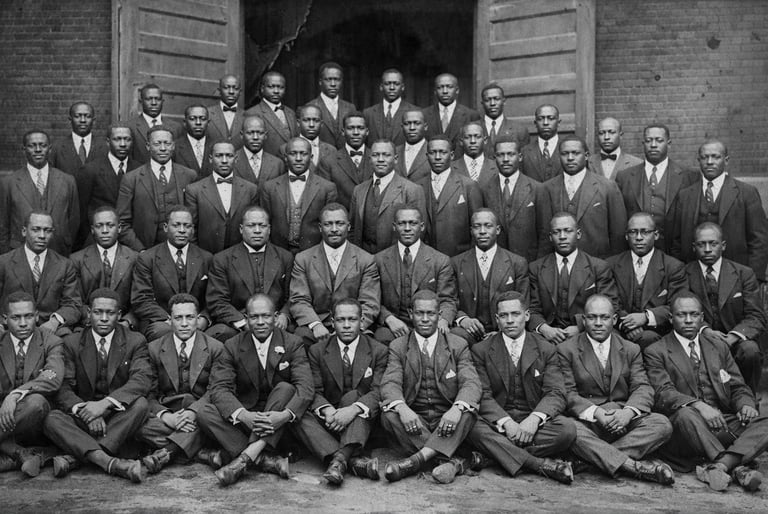
A legacy of prosperity, resilience, and systematic destruction.
The Attack on Success: The 1921 Massacre
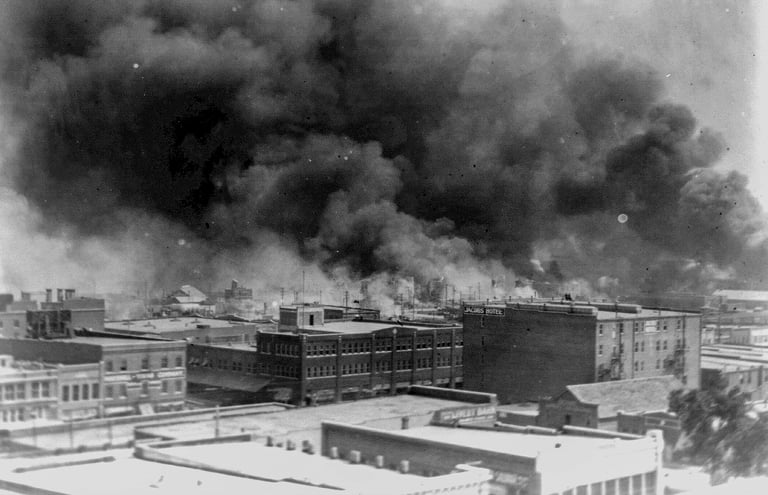
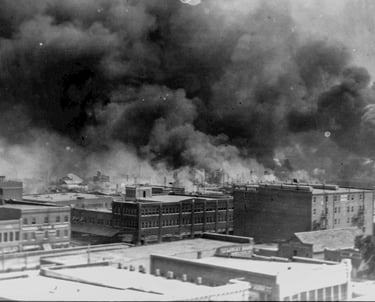
This prosperity was not erased by chance, but by a coordinated wave of racist violence on May 31 and June 1, 1921. It was a targeted blow against Black economic independence.
The Destruction
Within 18 hours, around 300 people were killed, 35 city blocks were leveled, more than 1,000 homes burned to the ground, and up to 10,000 people were left homeless overnight.
State Complicity
Recent reports (such as the U.S. Department of Justice report / DOJ 2025) confirm that state structures—police and militias—did not act neutrally. The National Guard effectively contributed to the escalation by disarming Black residents and placing them in detention camps, which made the looting and destruction of their property far easier.
Terror from the Sky
One of the most shocking chapters is the use of aircraft over Greenwood.
Attacks on a civilian community
Eyewitness accounts and historical research (including sources such as History.com) describe planes from which shots were fired at fleeing residents.
Incendiaries
While definitive, court-level proof of systematic firebombing remains historically complex, the overall picture is clear: this event is widely described as a uniquely shocking instance of aircraft being used to attack a thriving neighborhood and its civilian population.
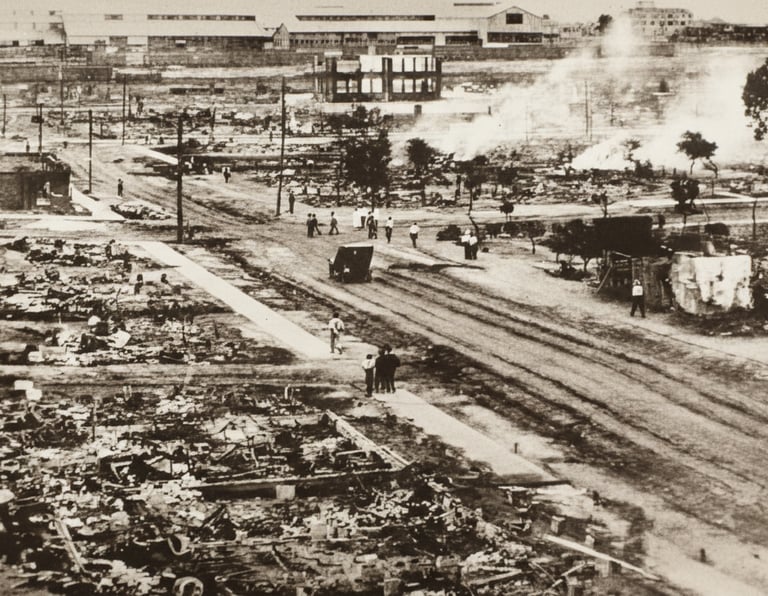
The name “Black Wall Street” is now synonymous with one of the greatest African American success stories. In the midst of the brutal Jim Crow era of racial segregation, the residents of Tulsa’s Greenwood District in Oklahoma built an economic ecosystem unlike anything else in the world.
With honor for our roots. With love for the future.
Black Wall Street was destroyed because its economic rise challenged a racist power structure. blackwallstreet.one stands not only for remembrance and memorial—but for rediscovering a blueprint: self-determination through education, entrepreneurship, ownership, and unity.
True freedom grows when we build our own institutions, strengthen our capital, and support local value creation—so opportunity expands, dignity is protected, and prosperity can carry across generations.
Let’s create spaces where people can thrive—together, fairly, and sustainably.

Ouer Values...
aren’t written — they’re designed.
Sankofa is a symbol of the wisdom to learn from the past in order to shape the future with intention.
It represents reflection, remembrance, and the responsibility not to lose valuable knowledge.
Fawohodie stands for freedom, independence, and emancipation.
It reminds us that true freedom is not achieved without sacrifice and is always tied to responsibility and personal commitment.
Nea Ope Se Obedi Hene represents responsible leadership and personal maturity.
The symbol conveys that true leadership grows out of service, and that one must learn to serve before being able to lead.
Bese Saka symbolizes prosperity, abundance, and economic strength.
At the same time, it stands for unity and cohesion as the foundation of sustainable success.
Owo Foro Adobe represents ingenuity, excellence, and exceptional capability.
It symbolizes the ability to achieve the extraordinary — or even the seemingly impossible — through skill and determination.
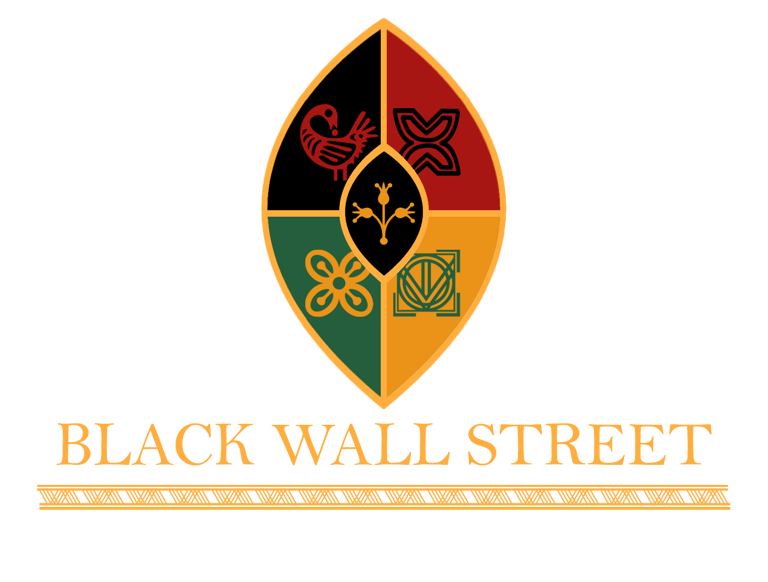
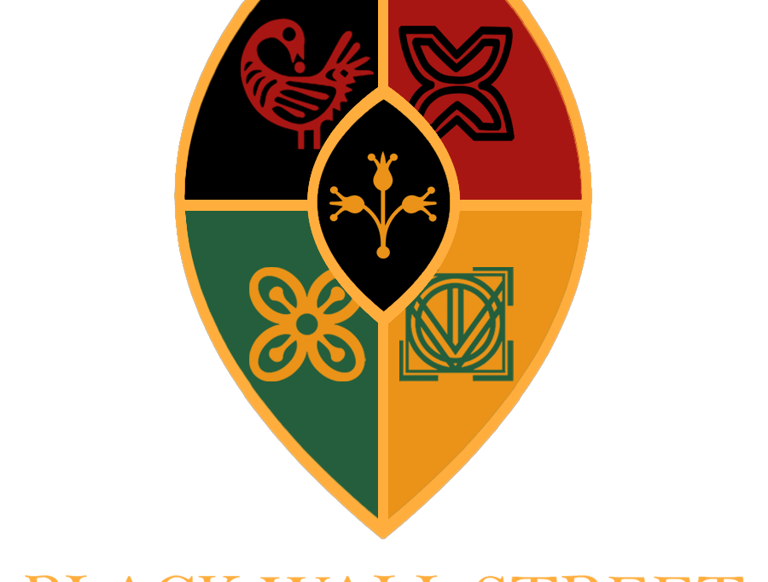
The shield represents resilience, self-trust, and the commitment to protect what truly matters.
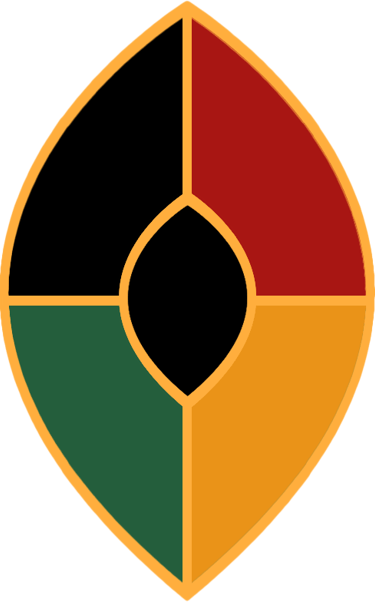









Our logo is composed of four colors, each carrying its own meaning, and seven powerful symbols — five of which are Adinkra symbols.
Together with the typography, the logo consists of twelve carefully chosen elements.
The Adinkra symbols originate from Ghana and trace back to the Akan people, who have used them for centuries as a visual language to convey values, wisdom, and guiding principles across generations.
Below, we highlight several of these symbols, beginning with the Adinkra tradition.
Ouer Values...
aren’t written — they’re designed.
Sankofa is a symbol of the wisdom to learn from the past in order to shape the future with intention. It represents reflection, remembrance, and the responsibility not to lose valuable knowledge.
Fawohodie stands for freedom, independence, and emancipation. It reminds us that true freedom is not achieved without sacrifice and is always tied to responsibility and personal commitment.
Nea Ope Se Obedi Hene represents responsible leadership and personal maturity. The symbol conveys that true leadership grows out of service, and that one must learn to serve before being able to lead.
Bese Saka symbolizes prosperity, abundance, and economic strength. At the same time, it stands for unity and cohesion as the foundation of sustainable success.
Owo Foro Adobe represents ingenuity, excellence, and exceptional capability.cIt symbolizes the ability to achieve the extraordinary — or even the seemingly impossible — through skill and determination.

Our logo is composed of four colors, each carrying its own meaning, and seven powerful symbols — five of which are Adinkra symbols.
Together with the typography, the logo consists of twelve carefully chosen elements.
The Adinkra symbols originate from Ghana and trace back to the Akan people, who have used them for centuries as a visual language to convey values, wisdom, and guiding principles across generations.
Below, we highlight several of these symbols, beginning with the Adinkra tradition.
Images speak louder than words
Let’s grow together and create something meaningful.
We look forward to your message.
Images speak louder than words
Let’s grow together and create something meaningful.
We look forward to your message.
Write your text here...
BLACK WALL STREET eG
office@blackwallstreet.one
© 2025. All rights reserved.
Genossenschaft i.G.
Liechtenstein